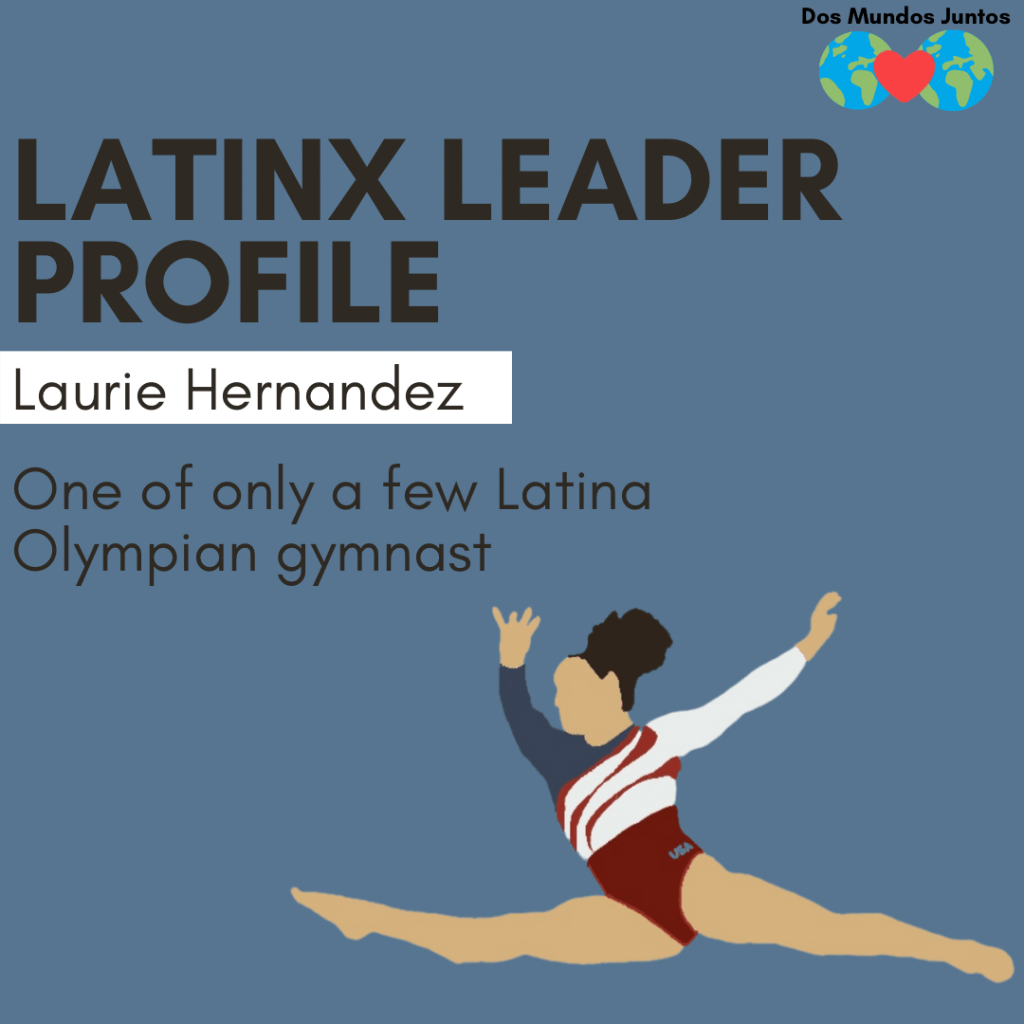
Our goal is to educate people by featuring Latinx Leaders that have impacted our community. Read below to learn about some prominent figures.
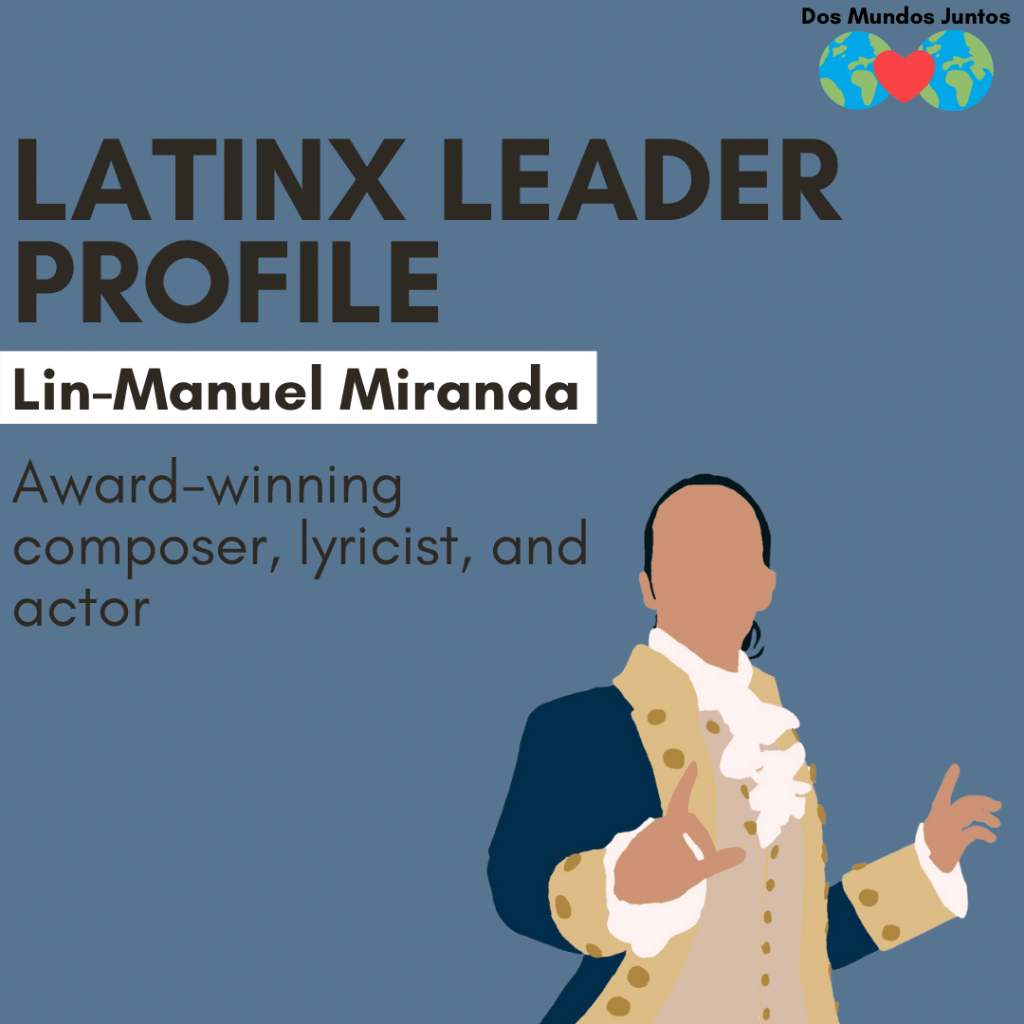
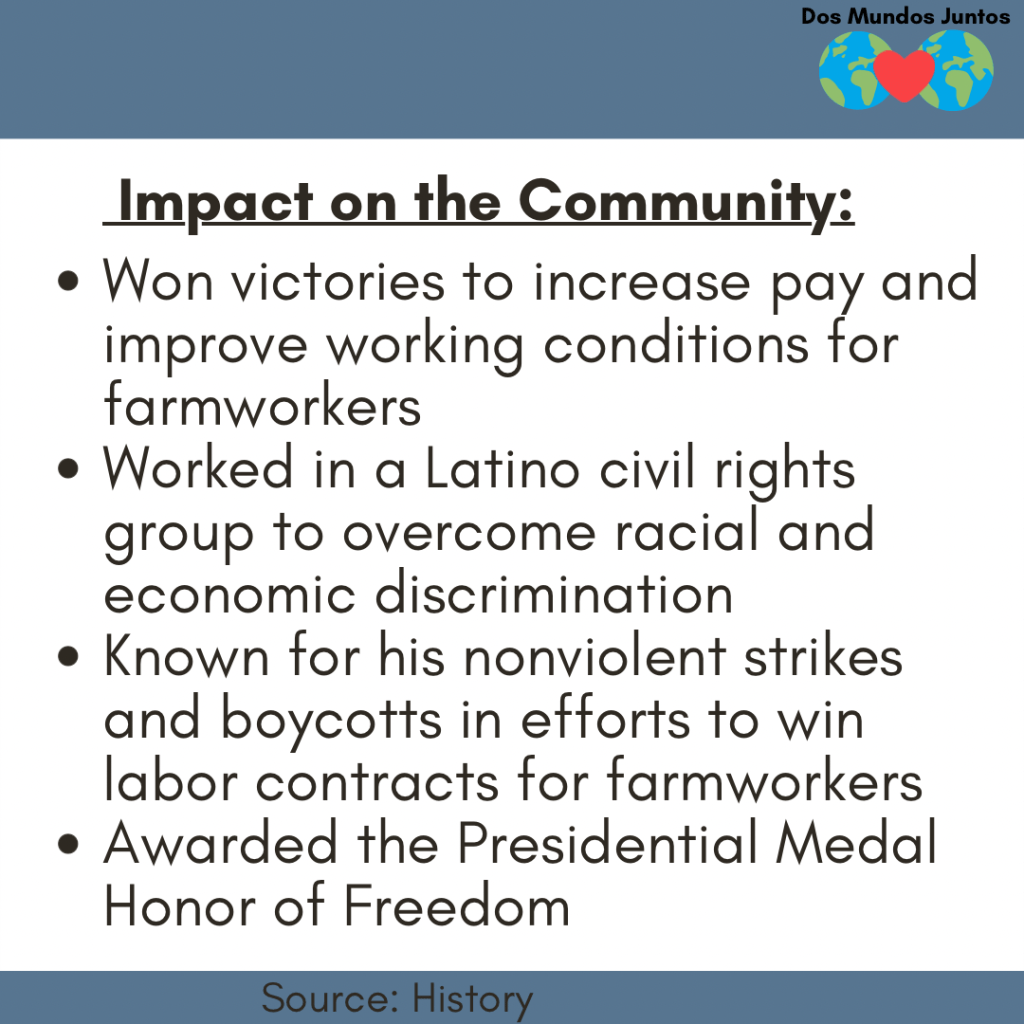
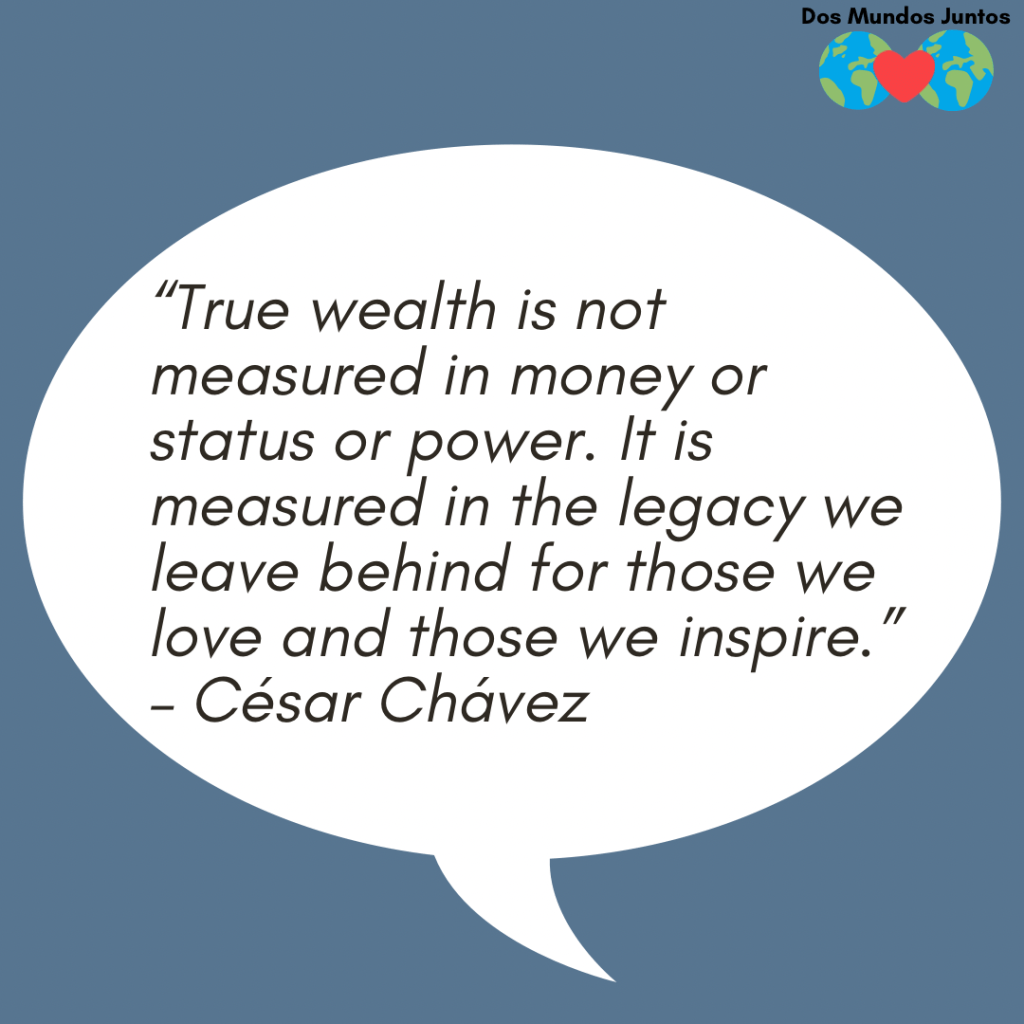
Our goal is to educate people by featuring Latinx Leaders that have impacted our community. Read below to learn about some prominent figures.
In Chicano! A Quest for a Homeland, a Public Broadcasting Service (PBS) documentary produced by Hector Galan and Mylène Moreno, viewers learn more about the hardships that Mexican Americans faced. Narrated by Henry Cisneros, the documentary argues that “overnight a hundred thousand Mexicans became foreigners on soil” after the United States won the Mexican-American war and Mexico lost half of its territory (2:49). This thesis seems reasonable and historically grounded because many Mexican people had their lives dramatically changed without a say. Although many people only know of the idea of manifest destiny after the United States won half of Mexico’s territory, they fail to learn about the lasting effects that it had on the Mexican Americans who had made a life for themselves in the territory. This documentary fits into the larger historical topic as it highlights the untold truth of the fight that Mexican Americans had to endure to earn their place in a society that was once their own.
The documentary has more primary sources than secondary sources, including videos of protests and speeches. Furthermore, clips of Mexican Americans in their daily life are shown over the narration throughout the whole documentary. These clips give viewers a visual sense of what occurred during that time period, so viewers are forced to see their living conditions and the true hardships that Mexican Americans had to endure. One example of a primary source was the narration of the Treaty of Guadalupe Hidalgo, revealing that Mexican Americans were promised “free enjoyment of their liberty and property” (3:03). This is an important primary source as it is the foundation for the rest of the argument. The documentary uses this statement to explain the actions that Mexican Americans took to advocate for their rights stated in the treaty and to illustrate Americans’ lost promise. This is a significant primary source for viewers to hear word for word what Americans had stated in a formal document to the Mexican Americans. To convey to viewers that tensions were rising, the documentary contains a short clip of Tajina explaining to the community that “we are now waiting for an answer from the State Department to claim what belongs to us” (7:06). This clip is beneficial for viewers in depicting Tajina as a prominent speaker for the Mexican American community as he rallies the community together with his speech. Lastly, the documentary uses video clips of protests for viewers to feel the full vitality of the Mexican American community and their effort to make a change in society. One specific example of this is the video clips of the Moratorium movement where many Mexican Americans gathered in a march. There are aerial pan shots that depict the 30,000 people who came together on the street which indicates to the viewer how huge of an event this was (44:59). Video evidence of Mexican Americans innocently dancing and listening to music at Laguna Park before the police declared an illegal assembly just to catch a group of people who stole beer (45:54). The documentary then shows the chaos, violence and stampede that erupted at the park (47:07-48:40). Clips of police officers beating innocent Mexican Americans were especially alarming as it makes the violence more surreal for viewers. These series of clips that illustrate the innocence of the Mexican Americans and the drastic events that followed hours later was effective in demonstrating the frustration that Mexican Americans had. These clips force the viewers to feel some sort of emotion and allow the viewers to better connect and understand the struggle for Mexican Americans in America.
The documentary uses secondary sources like poets, artists and community activists to further narrate the events that occur. For example, Alurista, a poet, describes the stark differences between the police and the Mexican Americans in their idea of the violence that occured at Laguna Park. He explains that “the police called it a Chicano riot, and the people called it a police riot” (48:05). The documentary is not just one sided in merely showing the Mexican American perspective. This source is important in revealing the reason why the Mexican Americans and the Americans/justice system cannot reach an agreement: they both view events differently. Both of the sides have different/opposite views on one another which merely increases the animosity between the two groups. Another secondary source, Rosalio Muñoz, Co-founder of the Chicano Moratorium Committee, exemplifies how the draft for the Vietnam war greatly affected Mexican Americans. Muñoz states that people were becoming an “expert at getting out of the war. . . so as more and more middle-class people could afford lawyers, the draft boards filled up their quotas with more of the poor and particularly Mexican Americans” (41:05-41:18). This source is successful in revealing how the wealth gap affected many Mexican Americans lives. Viewers can now learn that this was just one way in which the Mexican American community was affected and the lack of government involvement to interfere with the middle-class that was escaping the war. I believe that the documentary should have included more secondary sources from historians or interviews from how white people or police officers. As a result, viewers can learn about how nonwhite people reacted to the protests and lack of rights that were given to Mexican Americans. Compared to The American Pageant by Lizabeth Cohen and David M. Kennedy, they describe the terms of the Treaty of Guadalupe Hidalgo as “breathtaking” (384). In contrast, the documentary reveals that the treaty caused “a hundred thousand Mexicans [to become] foreigners on soil that had belonged to their families for generations” (2:49-2:57). Cohen and Kennedy focus on the idea of Manifest Destiny and the American perspective that the land gained was a significant stride for America’s westward expansion, while the documentary focuses on the Mexican American perspective and how they were trapped in a country that is not even theirs anymore.
In conclusion, Chicano! A Quest for a Homeland lays out the struggle and hardships that Mexican Americans had to endure. The PBS documentary also reveals the progression of how the Mexican American community created the Chicano movement to fight for the rights that they were once promised. This documentary fits into the larger historical topic as it preserves historical events that involved Mexican Americans (i.e. videos of protests and speeches), and this documentary highlights a new perspective of history from the Mexican American point of view.
Works Cited
Kennedy, David M., et al. The American Pageant: A History of the Republic. Houghton Mifflin Co., 2006.
Galan, Hector and Mylène Moreno, directors. Chicano! A Quest for a Homeland. YouTube, YouTube, 14 Sept. 2016, https://www.youtube.com/watch?v=eYfiCnHW_NU&feature=youtu.be. Accessed 20 May 2022.
As the progressive era reached the United States, so did the wave of media that filled the minds of what it means to be a non white. In An African American and Latinx History of the United States, Paul Ortiz gives a new perspective to American history through stories from Blacks and Latinos. Specifically in chapter six, “Forgotten Workers of America,” Ortiz highlights the hardships that immigrants had to face and their struggle to reach a higher status in society in the 1890s to 1940s. Ortiz argues that “class conflict was a pervasive fact of American life” (Ortiz 109) and that many of minority stories have gone untold or twisted by the media. This thesis seems reasonable and historically grounded because the media can often implement racial stereotypes and avoid sharing stories from non-whites. Thus, many of the immigrants dealt with unnecessary laws and punishments due to society’s beliefs. Additionally, this book fits into the larger historical topic as it doesn’t just focus on the historical perspective of white people. Ortiz is adding the mark of Blacks and Latinos to the story of the United States of America. These untold stories are important for second generational children to learn about the history of their ancestors, something that they most likely won’t learn in school.
Ortiz breaks the chapter into 4 parts: “Race Riots and Repatriation,” “The Great Depression,” “The Forgotten New Deal” and “The Unfulfilled New Deal.” Ortiz uses a multitude of primary sources including a variety of newspapers and non-white workers which are effective for the readers to truly understand the opinions of workers. Ortiz’s most effective use of primary sources is when he uses it to contrast the stark viewpoints between the Blacks and the whites. One example of this is when Ortiz quotes W.E.B. Du Bois, a well known advocate for gaining equality for Blacks, about how whites reacted to Blacks when they gained land ownership. Du Bois explains that the whites purposely prohibited Blacks from “benefiting from the new economic development in the South” (Ortiz 113). Ortiz goes further to quote the Negro World, a newspaper that targeted the audience of Blacks. Ortiz proves that this newspaper used their following to convince Blacks to give up their business, quit their job and abandon their land in order to improve the relationship with white people (Ortiz 113). Ortiz effectively demonstrates the irony that was occurring during this time on the different beliefs that people believed in how to integrate Blacks into society with whites. Additionally, Ortiz effectively describes how the Black people’s efforts were hindered with harsh setbacks from the press, a piece of evidence that further augments his argument. Ortiz quotes the Miami Herald, a newspaper that cautioned its white readers in all capital letters that “white supremacy is being assaulted in our midst. . .” (Ortiz 119). Ortiz shows first handedly how whites used the press to spread the message that they are still superior. Thus, these ideas will ring in the minds of millions of readers and affect the laws that are implemented to target Blacks. Lastly, Ortiz does not just reveal the newspapers that went against the Blacks, he also provides readers with other newspapers that used journalism to tell the untold story of Blacks. One example is when Ortiz quotes the Pittsburgh Courier that reports how wrongly Blacks have been treated by sheriffs (Ortiz 120). This primary source is effective in depicting how newspapers should have utilized the press: to report these incidents. He also uses this source to provide evidence in how many police investigations went nowhere due to the people involved being Black.
Ortiz solely uses a historian’s perspective as secondary sources. He specifically uses historians to elaborate on his argument and prove that other historians shared similar beliefs as him. This idea proves to the audience that his argument is not radical. One example of this is when Ortiz explains historian Carey McWilliams discovery of concentration camps that were used to imprison union activists. On the other hand, I think it would have been beneficial to have additional secondary sources such as other textbooks, scholarly articles, or biographies to give more perspectives on these issues to further support his perspective. Additionally, Ortiz could have analyzed more of his evidence to further support his argument about the drastic wages between Blacks and whites. One example of this is when he simply stated, “the paper also quoted supposed economic experts in the South who argued that if the federal government raised industrial wages, then Black farmworkers would refuse to work for white farmers” (Ortiz 124-125). Instead, Ortiz should have specifically quoted what the article stated in order for readers to truly believe his argument. This makes the reader question if this statement is believable or not if there is no evidence to support his argument. Towards the end of the chapter, he mainly uses one newspaper, the News and Courier to prove how manipulative the paper can be against Blacks. With the continuous quotes from this newspaper, the readers are forced to wonder if this is the only newspaper that supports his viewpoint. Ortiz should have found other newspapers to support his argument, so the readers can identify that this was a common theme for newspapers to embed ideas of status into the minds of people. Compared to other textbooks, The American Pageant by Lizabeth Cohen and David M. Kennedy described the red scare as a “nationwide crusade against left-wingers whose Americanism was suspect” (729). On the contrary, Ortiz describes the red scare as a term that was “designed to undermine the immigrant working-class and Black militancy” (117). Cohen and Kennedy don’t specifically name the people that were affected by the red scare; they just call them “left-wingers whose Americanism was suspect.” Ortiz specifically points out that the term greatly affected immigrants and Blacks.
In conclusion, An African American and Latinx History of the United States reveals a new side to American history from the perspectives of non-whites. He, along with other historians who share the experiences of non-whites in America, fit into the larger discussion of this topic by bringing up the harsh reality that many non-whites had to face due to America’s actions and beliefs. He successfully uses primary and secondary sources to describe how minorities were wrongly treated. He provides perspectives from both the whites and non-whites to support his argument. Ortiz leaves the reader wondering what other untold stories exist and how little we know about the stories of non-whites.
Works Cited
Kennedy, David M., et al. The American Pageant: A History of the Republic. Houghton Mifflin Co., 2006.
Ortiz, Paul. An African American and Latinx History of the United States. Beacon Press Boston.
Eye-opening, enlightening, and educational won’t even describe how much my school’s Racial Equity Training changed my views and other students’ views.
Over 100 students and staff (with a waitlist) gathered in the library on Feb. 25th to discuss shared experiences and hard topics like race. Dr. Lori Watson taught her program called SLAM (Student Leaders’ Antiracist Movement), a 3-year program to develop leadership skills around the idea of systemic racism and other isms.
From the onset, Dr. Watson established a safe environment where many students felt comfortable sharing their experiences with the whole group. We first discussed the history of racist events that minorities experienced, and how students felt when hearing about this (e.g. in their heart, body, mind, or spirit). We tackled questions that I hadn’t thought about: when was the first time that you realized that your race mattered? The most moving question was when she asked students if they experienced racism from staff or other students in the community. Many people had the courage to reveal their own racist experiences and how students and staff treated them. It was difficult to hear the racism that has been instilled in my own community without even realizing the extent of it. Hearing all of the stories reminded me why I am a journalist. It is important to tell other people’s stories to bring awareness and encourage others to make a change after hearing these stories. I think that’s what journalism is about: uncovering the underlying emotions and shedding light on that particular issue to bring about change. We talked about how everyone has a different narrative. To think that there are even more stories that people didn’t come forward to talk about makes me motivated to make a change for people to realize that these are shared experiences.
By: Madison Yue
On Oct. 8, 2021 Governor Gavin Newsom signed a law that made Ethnic Studies a required class for high schoolers by the year 2030. This decision comes two years after Newsom first vetoed the Assembly Bill. Unlike required history classes where students learn about American and World History, the new curriculum requires that students explicitly learn about case studies from diverse backgrounds. While schools have until 2030 to implement this law, Palo Alto Unified District (PAUSD) should implement this requirement now because it is important for students to understand all perspectives.
Both Gunn and Palo Alto High School (Paly) only offer Ethnic Studies as a semester history elective for juniors and seniors. Regardless of how important this class is, since it is an elective, the class does not run unless there are enough signups. According to Gunn history teacher Jeff Patrick, for over a couple of decades, Gunn has had ethnic studies in the course catalog. This year, however, Gunn is not running Ethnic Studies due to a lack of interest from students. Patrick says that they have gotten at most up to six signups compared to the 20 signups needed in order to run an elective.
Ethnic studies is an important class because Gunn has a wide range of different ethnicities and students who come from different backgrounds, cultures, and languages. According to the 2019-2020 report from the California Department of Education, out of 1, 996 students in Gunn, 1.2% are African American, 0.1 % are American Indian or Alaska Native, 44.1% are Asian, 1.1% are Filipino, 10.2% are Hispanic or Latino, and 0.8% are Pacific Islander. With the Ethnic Studies curriculum, it requires that students develop a “cultural understanding of how different groups have struggled and worked together, highlighting core ethnic studies concepts.” The curriculum will promote students to learn about the ancestral history of their peers which will allow students to understand one another on a deeper level. It will also provide students with new perspectives and empathy when discussing equity.
Many people may dismiss Ethnic Studies as an unnecessary course because it discusses topics that divide students along racial lines. However, it is important to address issues such as race instead of not recognizing it. The world is ever changing with new movements like the Black Lives Matter (BLM) protest or the LGBTQ+ movements that have risen. It is more important than ever for students to understand all perspectives.
The fact that Paly’s Ethnic Studies class has run for a couple of years and is currently running right now, makes it that much easier to implement the class at Gunn. Since there is already a set curriculum in the district and teachers who have experience teaching this class, Gunn has all of the resources to make this a required class for students. Furthermore, statistics have shown that Ethnic Studies has been proven to be effective for students. According to research from the Stanford Graduate School of Education, “a high school ethnic studies course examining the roles of race, nationality and culture on identity and experience boosted attendance and academic performance of students at risk of dropping out.”
In order to increase sign ups, a representative should present a presentation to each history class about what Ethnic Studies offers. Seeing a small blurb on the course catalog of what the class offers is simply not enough information for a student to fully comprehend what they will learn if they sign up for that class. With over 40 elective classes for students to choose from, it is important for students to be aware of the benefits of this class. Gunn can also encourage signups through Gunn’s newly founded Student Equity Committee. With like minded students with similar interests, students may be interested in learning about Ethnic Studies and eventually apply what they have learned to the Gunn community.
PAUSD should follow other high schools and implement Ethnic Studies as a required course sooner because it will strengthen the Gunn community as students can understand their peers’ cultures and backgrounds.
As with many stories, there are always two perspectives. In American History, the two perspectives are the white Americans versus the minorities (e.g. Latinos, Blacks, Native Americans, etc.). Different viewpoints are formed due to different backgrounds. As a result, people can exaggerate events and create misleading stories and beliefs unintentionally. This idea brings to mind a glaring question: Who’s story should we believe? In Occupied America: A History of Chicanos, historian and professor Rodolfo Acuña explores answers to this question. In this case, the two perspectives come from different Mexican heritage scholars and Acuña. He addresses the many myths and stereotypes of Mexicans that have been falsely created. Specifically, in Chapter 4, “Remember the Alamo: The Colonization of Texas,” Acuña argues that an increase in immigration from Mexico to Texas worsened racism and led to an increase in class divisions. He also describes some of the many myths that Historians are using to describe Mexicans. This thesis seems reasonable and historically grounded because Americans have had a pattern of discriminating against minorities with their idea of Manifest Destiny. Acuña brings a new perspective to history, specifically a minority perspective. Yet, some historians undermine his argument as he often highlights Mexicans as victims of Anglo treachery too much.
Acuña first addresses the effects of Texas annexation on Mexicans such as the sets of laws that were enacted to make Mexicans feel racially inferior. Here, Acuña provides readers with specific white leaders that discriminated against Mexicans. For instance, he specifically mentions that Charles Stillman “was the leader of the white cabal and he masterminded the left of the prime lands held by the old Mexican families.” Although Acuña supports his thesis, he, however, fails to provide readers with any primary or secondary sources from Stillman or the Mexicans who were affected by Stillman’s work. He simply just describes Stillman’s journey of monopolizing northern Mexico, a result which makes readers question whether these events and numbers are true or not. Second, Acuña discusses the false stereotypes that Historians have given Juan Cortina. Acuña explains that after a warning shot, Cortina shot Marshal Bob Spears who was whipping a Mexican with his pistol. Acuña argues that this was when “Cortina’s career as a revolutionary began” (Acuña 67). Like many other Mexicans, he believes that Cortina is a prominent leader who helped advocate for Mexicans. He gives readers a Historian’s perspective (a secondary source) to depict how people are falsely describing Cortina: “Lyman Woodman, a retired military officer, wrote a biography of Cortina, describing him as a “soldier, bandit, murderer, cattle thief, mail robber. . .” (Acuña 67). This source is effective for Acuña’s argument because it gives readers factual evidence of the false depiction. Readers are also forced to think about the other events or people that Historians are falsely describing. To further his argument that Cortina is being falsely depicted, he uses Cortina’s speech as a primary source: “My [Cortina] part is taken. . . the Lord will enable me, with powerful arm, to fight against our enemies” (Acuña 67). Instead of simply rewording Cortina’s speech, by quoting it, readers can get a better understanding of Cortina’s determination through his words.
Acuña makes some strong points in his argument and uses primary and secondary sources, but I believe that if he used more primary sources such as diaries or songs, it would make his argument stronger. Furthermore, Acuña name drops a couple of sources but never quotes what they say, he simply paraphrases. For instance, he writes, “The El Paso Evening Tribune reported that 3,000 rebels were marching on Guerrero, which was defended by 800 Mexican soldiers” (Acuña 79). His argument would be more effective if he specifically quotes what the newspaper reported word for word because they are primary sources who lived to report that event. To support his argument, Acuña mentions that “white newcomers formed their own neighborhoods, strictly segregating Mexicans to the older parts of the town” (Acuña 78). Although this is a strong point, I wish that he dived deeper by providing primary sources for what this meant for the Mexicans. Reading someone’s diary who was affected by segregation or a letter with examples of this segregation would make his argument stronger as readers can truly imagine the effects.
Acuña’s argument adds to the greater historical viewpoint as Historians hear a new perspective. This new perspective has spurred debates among other Historians as scholarly reviews about Acuña’s arguments have been mixed. They believe that Acuña is portraying Mexicans as victims of Anglo betrayal. Many prominent scholars, including Gregory Rodriguez, have questioned Acuña’s argument. In a Los Angeles Times book review, Rodriguez accused Acuña of being “perhaps among the first to openly declare that Mexicans did not come to the United States in order to improve their economic prospects” (Rodriguez). Furthermore, he argues that Acuña is too focused on “telling the story of Mexican Americans (the good guys) than. . . highlighting Chicano oppression at the hands of Anglo Americans (the bad guys)” (Rodriguez). In the case of the Treaty of Guadalupe Hidalgo, Professor Rolando Diaz and Acuña both agree that it was the cause of Mexican’s discrimination, but their arguments differ in the effects of Mexican immigration. Acuña claims that after the Treaty of Guadalupe Hidalgo, it “made Mexicans white, without which status they could not be equal or immigrate to the United States” (Acuña 79). In contrast, Diaz argues that after the Treaty of Guadalupe Hidalgo, Mexicans “don’t belong on either side of the U.S./Mexican border.” He also argues that “the feeling of alienation” not only comes from being considered a “perpetual foreigner in the United States,” but also considered “one who went north and abandoned his language, culture and history in Mexico” (Diaz 33). Here, Acuña blames the Americans for the inequality of Mexicans and never mentions the effects that Mexicans had on their own country.
In conclusion, Acuña’s Occupied America: A History of Chicanos makes some strong points about the effects of the Texas annexation to make Mexicans feel racially inferior and discriminated against. He highlights the many false stereotypes that Historians have depicted Mexicans, a perspective which adds to the history of America’s effects on minorities. Although I do agree with his argument, he fails to provide a sufficient amount of plausible evidence with some of his examples which made his argument weaker. These sources make readers question what is true and what is not true of the stories that people hear from a greater historical perspective. As there are two sides to the American and minority story, there are two sides to Acuña’s argument and other Historians’ argument who differ in the depiction of Chicanos. With that, it is possible that both stories can both be right because they have their own perspective.
Acuña, Rodolfo F. Occupied America: A History of Chicanos. 8th ed., Pearson, 2015.
Mechica: Indigenous Origin of the Chicano Hybrid Identity.”What’s Right (and Wrong) with Chicano Studies: An Exchange.” Los Angeles Times, Los Angeles Times, 10 Sept. 2000, https://www.latimes.com/archives/la-xpm-2000-sep-10-bk-18712-story.html.
American history has often highlighted the success of colonization through the lens of white America by emphasizing nationalism and unity. Yet, the richness of American history has often overlooked the stories of hardships experienced by non-whites (e.g., Blacks, Native Americans, Mexicans). In A Different Mirror, historian and ethnographer Ronald Takaki paints a different picture of American history by showcasing America’s white racist, heavy handed exploitation of non-whites by stealing their land and resources. In chapter 7, “Foreigners In their Native Land,” Takaki specifically exposes the decline of Mexicans’ livelihood as a result of America’s colonization of California and Texas. He argues that Mexicans, living in their native land, were treated as foreigners by the real invading foreigners, the Americans. This thesis seems reasonable and historically grounded because America has shown a pattern of oppressing non-whites such as Blacks, Native Americans and Japanese by stealing their land and displacing them without legal recourse.
Takaki organizes his chapter in an effective way by first giving background information before and during America’s westward colonization. Second, he provides specific details on the effects of American colonization on Mexicans from a political, social and economical perspective. Third, he explains how Mexicans were able to unite as a community against laws imposed by Americans. Throughout his explanations, Takaki uses both primary and secondary sources to reveal the inherent problems and preconceived beliefs that Americans have on Mexicans. Many primary sources include diaries, messages to Congress, letters, songs, and chants contrasting both the Mexican and American viewpoints. Using primary sources like diaries helps develop an emotional connection with the reader who is reading the raw personal emotion of the writer, thus, making Takaki’s argument more effective. For example, when Takaki describes American immigration into Texas, he quotes Lieutenant Jose Maria Sanchez’s diary which captures his angst about America’s encroachment: “They immigrate constantly, finding no one to prevent them, and take possession of the sitio [location] that best suits them without either asking leave or going through any formality other than that of building their homes” (Takaki 156). Furthermore, Takaki writes, “Governor Juan Alvarado observed then added unhappily: “Would that the foreigners that came to settle in Alta California after 1841 had been of the same quality as those who preceded them. . . . Governor Pio Pico nervously complained: “We find ourselves threatened by hordes of Yankee immigrants who have already begun to flock into our country and whose progress we cannot arrest”’ (Takaki 162). As a result, Takaki supplies multiple credible sources that effectively paint a vivid picture of the unrest that many Mexicans were facing as more Americans immigrated. Once the U.S. gained Texas, Takaki calls attention to how Mexicans were greatly affected financially due to the “dual wage system” that Americans established. This system left many Anglos to obtain higher wages, while many foreign miners had to pay a separate tax. As a result, many Mexicans were “vulnerable to debt peonage” (Takaki 173) and therefore they were forced to give up their land. Similar to other minorities and women, Mexicans’ voting rights were also limited. These examples provoke readers to ask how these issues compare to the issues that Mexicans are facing today. Here, Takaki could have compared and contrasted the similarities and differences that America has enacted on other minorities to prove that America’s treatment of non-whites has been consistent over time. In the end, through primary sources and specific examples, Takaki explains that although Mexicans were first in Texas, the Americans persisted to conquer their land and even implemented laws that would ensure that Mexicans were inferior to whites. This eventually caused them to become foreigners in a land that they had once called their home.
Takaki uses secondary sources including diverse viewpoints from historians, essays, and newspaper articles. Sources from newspapers are effective because it gives readers a sense of what citizens were reading during that time period. Takaki provides evidence of how Mexicans are depicted while working in railroad construction which often spawned a variety of stereotypes cultivated in society: “. . . the Morning Press reported that the “Chinamen section hands” of the Southern Pacific had been replaced by “a gang of Mexicans”” (Takaki 172). Despite the hardships that Mexicans including other minorities like the Japanese went through, Takaki reminds us that they never forgot their identity. In the 1903 strike for better wages, a local newspaper explained how Mexicans developed their sense of culture, community and grit as one. Takaki wrote, “‘Everyone knows,” commented the Los Angeles Labor Press, “that it was the Mexican miners that won the strike at Clifton and Morenci by standing like a stone wall until the bosses came to terms.’” (Takaki 175). To make his argument stronger, I believe that Takaki should have included how Mexican’s unity and culture through protests helped shape the community environment and values that they still have today. This would prove that even though the Americans displaced them, they were able to unite and find their own identity in their new “foreign” land. In contrast to Takaki’s perspective, The American Pageant explains that Texas pioneers were “annoyed by the presence of Mexican soldiers, many of whom were ragged ex-convicts” (Kennedy 267) to highlight the American perspective. Takaki, however, focuses on the Mexican’s perspective: “Americans continued to cross the border as illegal aliens” (Takaki 156). Additionally, the textbook describes that the “energetic and prolific” (Kennedy 267) Texan Americans outnumber the Mexicans, while Takaki merely states that the Americans outnumbered the Mexicans (Takaki 156).
In conclusion, Takaki’s “Foreigners in their Native Land” illustrates how even though Mexicans arrived first, America aggressively took their land and severely punished them through death or through the enactment of discriminatory laws. By telling these stories, Takaki highlights an uncomfortable truth that American colonization was not at all heroic as previously presented but instead a contradiction of America’s own values and beliefs that has too often been promoted as the highest standards in the world. With that, we are only left with the hope that one story can change the narrative of a larger story as we strive to treat non-whites better in the future.
Takaki, Ronald. A Different Mirror. Little, Brown and Company, 1993.
Kennedy, David M., et al. The American Pageant: A History of the Republic. Houghton Mifflin Co., 2006.
It was the basic necessities in life like water, housing rights, environmental justice, and restorative justice that changed my view on East Palo Alto (EPA) and the people around me. Through hearing stories, I have learned about the gentrification, diversity and community in EPA.
Living in Palo Alto, I realize that I come from a privileged background, but through this lens I hope to learn more and spread awareness of these issues to my friends in Palo Alto.
My interest in Chicanx/Latinx areas began during the pandemic. I noticed the inequalities that arose when my classmates from East Palo Alto were disadvantaged compared to the majority of students who had better access to the internet, tutors, and meals during the day.
Right now, I am volunteering at Nuestra Casa and Youth United for Community Action to immerse myself in the struggles that EPA is going through. Here, I have done food distribution, outreach for the eviction moratorium (AB-832 COVID-19), attended the Bay Area Tenant Conference, and heard stories about the many struggles that EPA youth are enduring. I have also done some general research on the Chicanx civil rights movement in California, including land grants, farm labor movement, educational reform and political activism. There are a plethora of untold stories in EPA that have yet to be told. Through my blog posts, I plan to create a platform to spread awareness through the diverse stories of EPA.

 Dos Mundos Juntos